How Showing Up and Mowing the Lawn Can Legally Make Abandoned Property Yours — A Quirky Law That's Still Very Much Alive
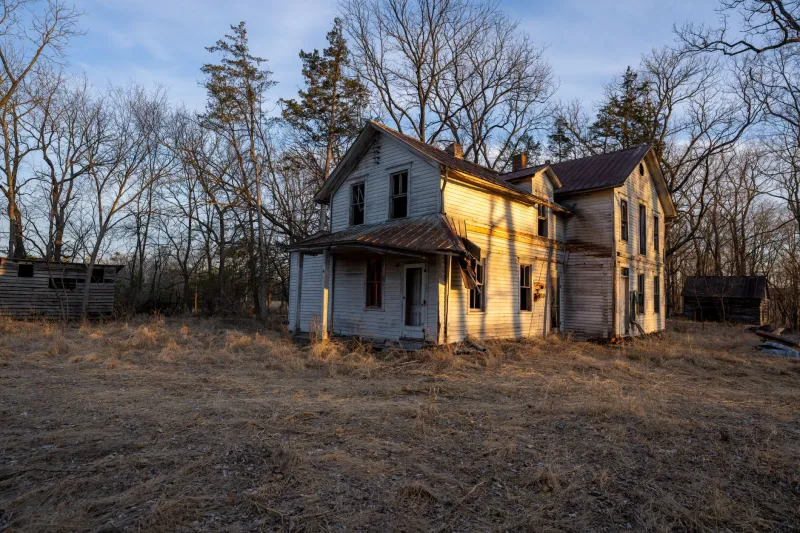
Somewhere in rural Ohio, a man spent twelve years maintaining a strip of overgrown land next to his property. He mowed it. He fenced it. He planted a garden on it. The original owner — a distant relative of a long-dead farmer — had no idea the parcel even existed in their name.
Then the man filed a quiet title action in county court. And a judge gave him the land.
This isn't a loophole someone invented. It's called adverse possession, and it's been part of American property law since before the country existed.
The Legal Doctrine That Sounds Made Up (But Isn't)
Adverse possession is one of those legal concepts that law professors love because it challenges everything people assume about property rights. The basic idea: if someone occupies land openly, continuously, and without the owner's permission for a legally defined period of time, they can potentially claim legal ownership.
Every state has its own version of the law, with different time requirements ranging from as few as five years in California to as long as twenty-one years in some northeastern states. Most states require the occupation to be:
- Open and notorious — visible, not hidden
- Actual — the person must physically use the land
- Exclusive — not shared with the general public or the legal owner
- Continuous — uninterrupted for the statutory period
- Hostile — meaning without the legal owner's permission (not that anyone has to be angry about it)
Some states add a requirement that the claimant pay property taxes on the land during the occupation period. That wrinkle alone filters out a lot of casual attempts.
Where the Homesteading Era Left Things Messy
The 1970s back-to-the-land movement sent thousands of Americans into rural areas to stake out homesteads, often on land with murky or fragmented ownership histories. Some of that land was purchased through informal agreements. Some was simply occupied. Deeds changed hands via handshakes. Title chains got broken.
Decades later, heirs of original owners have sometimes discovered they hold title to land that strangers have been living on and improving for thirty years. Conversely, people who believed they owned land have learned their title was never legally clear.
The result is a patchwork of disputed, abandoned, and legally ambiguous parcels scattered across rural America — and adverse possession is one of the few legal mechanisms designed to resolve exactly this kind of mess.
Local governments in some areas have quietly encouraged the process. When a property has been abandoned, taxes haven't been paid, and a neighbor has been maintaining it for years, a successful adverse possession claim can actually bring the parcel back into the tax rolls under a responsible owner. From a municipal perspective, that's often a better outcome than a perpetually neglected property tied up in probate.
Real Cases, Real Complexity
In 2011, a Texas man named Kenneth Robinson filed an adverse possession claim on a $330,000 home in Flower Mound that had been abandoned during the foreclosure crisis. He paid a $16 filing fee, moved in, and maintained the property. The case attracted national attention and considerable outrage — though it ultimately did not succeed, partly because the bank holding the mortgage moved quickly to assert ownership.
But less dramatic cases succeed regularly, with little fanfare. Boundary disputes between neighbors — where a fence has been in the wrong place for decades — are often resolved through adverse possession claims. Agricultural land that has been farmed by the same family for generations, despite a cloudy original title, has been legally transferred through the doctrine.
The cases that succeed tend to share common elements: a genuinely absent or unaware legal owner, a claimant who has consistently and visibly used the land, and a clear paper trail of maintenance, tax payments, and continuous occupation.
What This Isn't — And Why That Matters
It's worth being clear: adverse possession is not a fast track to free real estate. It is not squatting in the casual sense. And it's not a strategy that works on occupied or actively managed properties.
Attempting to claim land that someone else is actively using or monitoring is both legally futile and potentially criminal — trespassing charges don't disappear because you've mowed someone's lawn a few times.
The cases where adverse possession actually succeeds are typically those where the land has been genuinely abandoned, the owner is unreachable or unaware, and the claimant has done the legal work — including, in many states, filing a quiet title action in court to formally establish ownership.
Attorneys who specialize in real property law can walk through the specific requirements in any given state. The variation is significant enough that what works in Arizona may not apply in Vermont.
The Deeper Point About Land and Time
What makes adverse possession genuinely interesting is what it reveals about how property law actually thinks about land. Ownership isn't purely abstract — it's tied to use, stewardship, and presence. A title document matters, but so does who shows up every week to take care of a place.
In an era when abandoned properties, unclear inheritances, and forgotten parcels are increasingly common — particularly in post-industrial Midwest towns and rural areas hit by generational out-migration — that philosophy has real consequences.
Somewhere right now, someone is quietly maintaining a piece of land that nobody else seems to want. And in a few years, they may be able to prove it's theirs.