Before Credit Scores Existed, Americans Built Trust With Paper and Promises — And Some Still Do

When Your Word Was Your Credit Score
In 1740, Benjamin Franklin needed money to expand his printing business. There were no credit bureaus, no FICO scores, no banks offering small business loans. Instead, Franklin wrote a simple promissory note, had it witnessed by respected community members, and found a merchant willing to accept it in exchange for equipment.
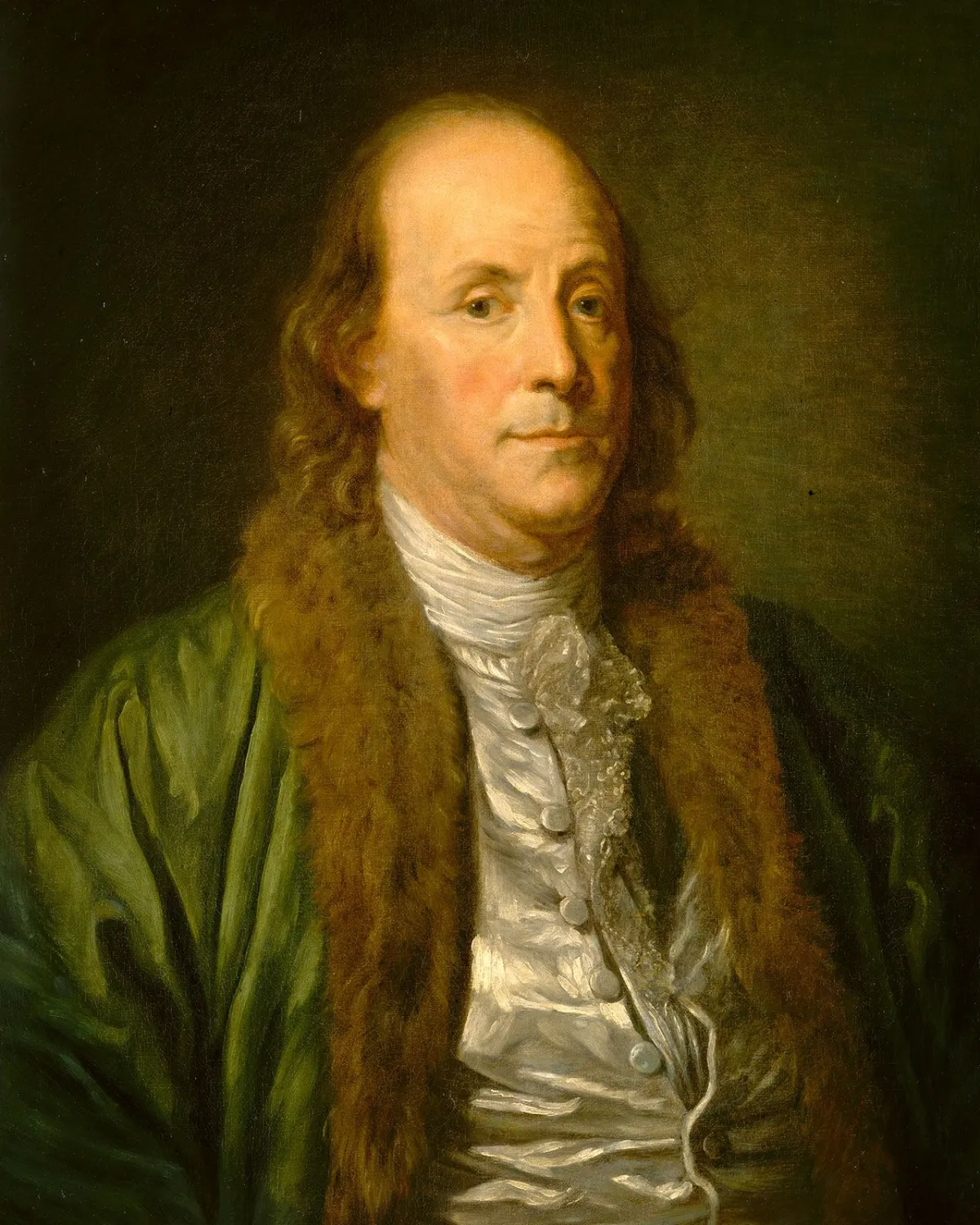 Photo: Benjamin Franklin, via cdn.britannica.com
That piece of paper, backed by nothing more than Franklin's reputation and community standing, became the foundation for one of America's first media empires.
What Franklin used wasn't unique to famous founders. It was the standard system for building credit in pre-industrial America — a sophisticated network of personal guarantees, community vouching, and documented promises that somehow managed to fund an entire economy without a single credit report.
The Mechanics of Colonial Credit
The system worked through layers of personal relationships and documented commitments. At its core were promissory notes — formal written promises to pay specific amounts by certain dates. But the real innovation was how communities validated and transferred these promises.
Local merchants, clergy, and established citizens served as informal credit references. If Thomas the blacksmith vouched for William the carpenter, and the local pastor confirmed both men's character, William could secure materials on credit from suppliers who had never met him.
The key was documentation. Every transaction, every guarantee, every character reference was written down and often notarized. These paper trails created a web of accountability that stretched across colonial communities and even between colonies.
The Trust Networks That Built America
By the 1700s, these informal credit networks had become sophisticated enough to fund major enterprises. Ship owners financed voyages through chains of promissory notes. Land speculators funded purchases through community-backed promises. Even the Continental Congress used variations of this system to finance the Revolutionary War.
 Photo: Continental Congress, via www.americanrevolution.org
The networks were particularly strong in merchant communities. A trader in Philadelphia could secure goods from a supplier in Boston based on vouching from mutual contacts in New York. The system relied on reputation as collateral — lose your good name, and you lost access to credit.
Women, despite legal restrictions, often participated through these networks. Widows running businesses could access credit through vouching from their late husbands' business partners. Unmarried women with skills could secure startup funding through family and community connections.
Why the System Faded
The rise of banks in the 1800s gradually displaced personal credit networks. Banks offered something the old system couldn't: anonymity. You didn't need to know your banker personally or have community standing. You just needed collateral.
By the early 1900s, formal banking had largely replaced informal credit networks in most of America. The personal promissory note became a relic, something used only between family members or in remote areas where banks hadn't yet reached.
But the legal framework never disappeared. The laws that made colonial credit networks possible — the right to write promissory notes, the enforceability of witnessed agreements, the ability to assign debt to third parties — remained on the books.
The Underground Renaissance
Today, variations of the colonial system are quietly making a comeback, particularly among freelancers, artists, and small business owners who struggle with traditional banking.
Sarah Chen, a graphic designer in Portland, uses what she calls "community credit circles." When she needed $15,000 to upgrade her equipment, she wrote promissory notes to five different clients, promising to repay them through discounted future work. Each client vouched for her reliability to the others.
"It's basically what my great-grandmother did when she needed money for her restaurant," Chen explains. "Except instead of the local pastor vouching for me, it's my LinkedIn network."
The Modern Mechanics
Contemporary practitioners have adapted colonial methods to modern needs. Instead of relying solely on local community members, they build trust networks through professional associations, online communities, and shared interest groups.
The documentation has also evolved. While handwritten promissory notes still work legally, many people now use digital platforms to create, witness, and track their agreements. Some entrepreneurs use blockchain technology to create permanent, transparent records of their promises and payments.
The basic principle remains the same: personal relationships and documented commitments can substitute for traditional credit when banks say no.
Where It Works Best
The revived system works particularly well in communities with strong social connections and shared interests. Artist collectives, tech meetup groups, and local business associations have all spawned informal credit networks.
It's also gaining traction in immigrant communities, where traditional credit can be difficult to access. Recent immigrants often recreate versions of trust-based lending systems from their home countries, adapted to American legal frameworks.
Rural areas, where everyone knows everyone else, have seen some of the most sophisticated modern implementations. Farmers, small manufacturers, and service providers create elaborate networks of mutual credit and vouching.
The Legal Reality
What surprises many people is how legally solid these arrangements can be. Properly written and witnessed promissory notes are enforceable in court. Character references, while not legally binding, can influence judges and juries in disputes.
The key is proper documentation. Modern practitioners often work with attorneys to ensure their agreements meet current legal standards while maintaining the flexibility that made the colonial system work.
Some states have updated their laws to explicitly support alternative lending arrangements, recognizing that traditional banking doesn't serve everyone's needs.
The Digital Twist
Technology has added new dimensions to the old system. Online platforms now allow people to create, manage, and trade promissory notes digitally. Social media provides new ways to establish and verify reputation.
Some entrepreneurs use professional networking sites as modern versions of colonial character references. A strong LinkedIn profile with endorsements from respected contacts can serve the same function as a letter from the local pastor in 1750.
Cryptocurrency communities have experimented with tokenized versions of promissory notes, creating digital assets backed by personal reputation rather than traditional collateral.
The Risks and Rewards
Like any credit system, the revived colonial model has risks. Without formal credit reporting, it's harder to assess someone's full financial picture. Disputes can strain personal relationships in ways that formal banking disputes don't.
But for people excluded from traditional banking — whether due to poor credit, unconventional income, or simply being too small for banks to bother with — these networks provide access to capital that might otherwise be impossible to obtain.
The Lessons for Today
The persistence and revival of colonial credit methods reveals something important about trust and commerce. Despite centuries of financial innovation, there's still value in systems based on personal relationships and community accountability.
For modern entrepreneurs, the colonial model offers an alternative to both traditional banking and newer options like crowdfunding. It's more personal than a bank loan but more formal than borrowing from friends.
Most importantly, it demonstrates that credit doesn't always require institutions. Sometimes all you need is paper, promises, and people willing to vouch for your word.