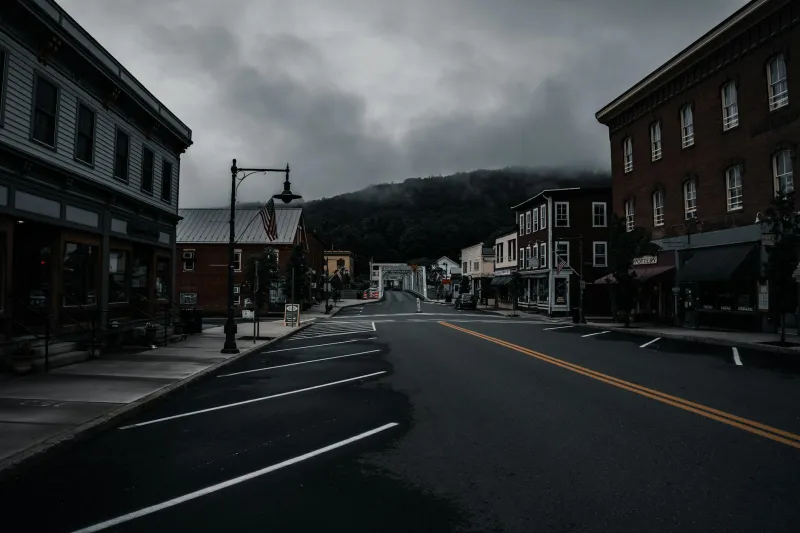
The Day Loyston, Tennessee Ceased to Exist
In 1936, residents of Loyston, Tennessee received an unusual visit from federal agents. These weren't tax collectors or prohibition officers — they were land acquisition specialists from the Tennessee Valley Authority, and they had come with an offer the town couldn't refuse.
 Photo: Loyston, Tennessee, via unitedstatesghosttowns.com
The government needed Loyston's land for the Norris Dam project. Every home, every business, every cemetery would soon be underwater. But unlike the forced relocations that characterized westward expansion, this time the government was writing checks.
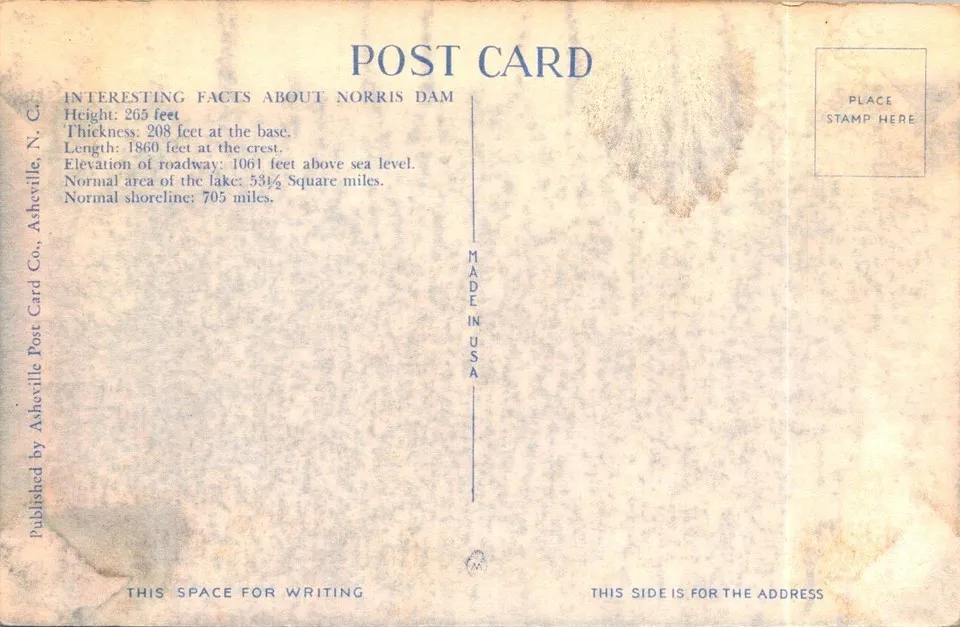 Photo: Norris Dam, via i.ebayimg.com
Some families received buyouts worth more than they'd ever seen. Others felt cheated by appraisals that didn't account for generational attachment to the land. By 1937, Loyston was a ghost town. By 1938, it was 200 feet underwater.
The residents scattered across East Tennessee, carrying stories that most Americans have never heard.
The Great Government Relocation Experiment
Loyston wasn't unique. Throughout the 20th century, the federal government quietly relocated dozens of American communities. The reasons varied — hydroelectric projects, military installations, national parks, interstate highways — but the process was remarkably consistent.
Government agents would arrive with surveys and appraisals. Residents could negotiate, but they couldn't say no. The difference was in the details of the deals, and some communities figured out how to work the system.
In Virginia, the residents of Hog Island negotiated relocation packages that included not just fair market value for their homes, but moving expenses, job placement assistance, and guaranteed mortgages in their new communities. Some families ended up in better financial shape than they'd started.
The Families Who Came Out Ahead
Not every government buyout was a sob story. Take the case of Seneca, Pennsylvania, relocated in the 1960s for the Kinzua Dam project.
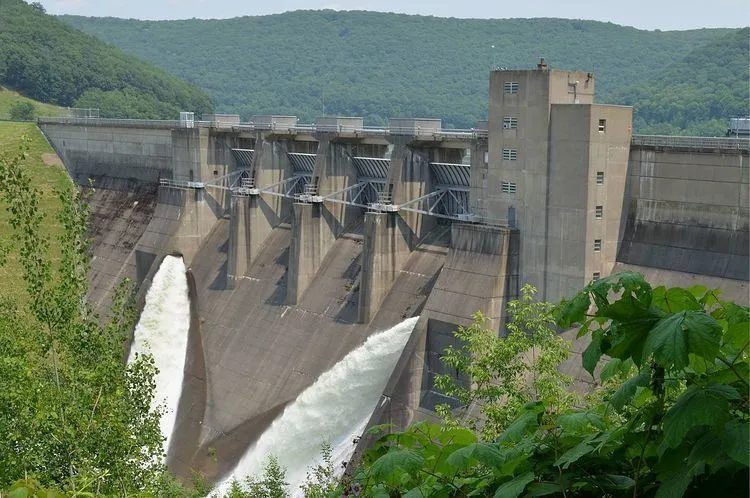 Photo: Kinzua Dam, via alchetron.com
The Seneca Nation of Indians, which had been fighting the project in court, eventually negotiated a settlement that included not just individual property compensation, but community development funds, educational scholarships, and revenue-sharing agreements from the dam's power generation.
Some tribal families used their buyout money as seed capital for businesses in their new locations. Others invested in education, sending children to colleges they never could have afforded before the government came calling.
Decades later, many of these families trace their current prosperity back to that forced relocation.
The Modern Version Nobody Talks About
Here's what most Americans don't know: these government buyout programs never really ended. They just got quieter and more specialized.
FEMA's Hazard Mitigation Grant Program still pays homeowners to relocate from flood-prone areas. The buyouts are voluntary, but they're often generous enough to tempt residents who've been flooded multiple times.
In recent years, entire neighborhoods in Louisiana, Texas, and North Carolina have essentially disappeared through these programs. The government purchases properties at pre-disaster values, demolishes the structures, and converts the land to permanent green space.
For residents who time it right — applying after a major disaster when federal money is flowing — the deals can be remarkably good.
The Strategy Some Communities Figured Out
The most successful relocated communities shared certain characteristics: they organized early, hired their own appraisers, and negotiated collectively rather than individually.
In the 1950s, when the Army Corps of Engineers needed to relocate parts of several Kentucky towns for flood control projects, some communities formed relocation committees that functioned almost like labor unions. They pooled resources to hire lawyers and negotiated package deals that included infrastructure development in their new locations.
These organized communities often received not just fair compensation for individual properties, but federal funding for schools, utilities, and community centers in their destination towns.
The Paper Trail That Reveals Everything
Government relocation files, now available through Freedom of Information Act requests, tell fascinating stories about American mobility and federal spending.
Some families received buyouts in the 1940s that, adjusted for inflation, would be worth over $500,000 today. Others were lowballed on appraisals and never recovered financially.
The difference often came down to legal representation and community organization. Families who hired their own attorneys and appraisers typically received settlements 30-50% higher than those who accepted the government's initial offer.
Why These Stories Stay Hidden
Government agencies don't publicize successful relocations, partly because it might encourage communities to hold out for better deals. But the bigger reason is political: these programs represent a form of government spending that doesn't fit neatly into either party's narrative.
Conservatives don't like to highlight cases where federal intervention improved people's lives. Liberals don't want to celebrate programs that displaced communities, even voluntarily.
So the stories stay buried in archives, known mainly to the families who lived them.
The Modern Opportunity
For Americans living in areas prone to repeated natural disasters, FEMA buyout programs represent a version of the same opportunity that Loyston and Hog Island residents faced decades ago.
The key is understanding that these programs exist, knowing how to navigate the application process, and recognizing that the initial offer isn't necessarily the final offer.
Some recent participants have used FEMA buyouts to relocate to areas with lower cost of living, effectively upgrading their financial situation while escaping climate risk.
The American Migration You Never Heard About
These government-sponsored relocations represent one of the largest internal migration movements in American history — larger than the Dust Bowl exodus, more systematic than the Great Migration, but far less documented.
Millions of Americans have been touched by these programs, either directly or through family stories passed down through generations. For some, government relocation was a disaster. For others, it was the best thing that ever happened to their family's finances.
The difference often came down to information, organization, and timing — the same factors that determine financial success in any negotiation with the federal government.