Most people, when they think about financially smart places to live in America, picture a mid-sized Sun Belt city — Phoenix, Boise, maybe Raleigh. The playbook is familiar: escape California or New York, land somewhere cheaper, keep the salary. Rinse and repeat.
But there's a city in the northern Rockies that's been quietly rewriting that playbook for a specific type of person — and the early movers have done remarkably well.
Welcome to Missoula, Montana.
Not the Montana You're Picturing
Before you picture a frozen outpost of ranches and gravel roads, pump the brakes. Missoula is a university town — home to the University of Montana — with a surprisingly vibrant arts scene, independent restaurants, a legitimate food culture, and a downtown that feels more like a scaled-down Portland than a rural frontier town.
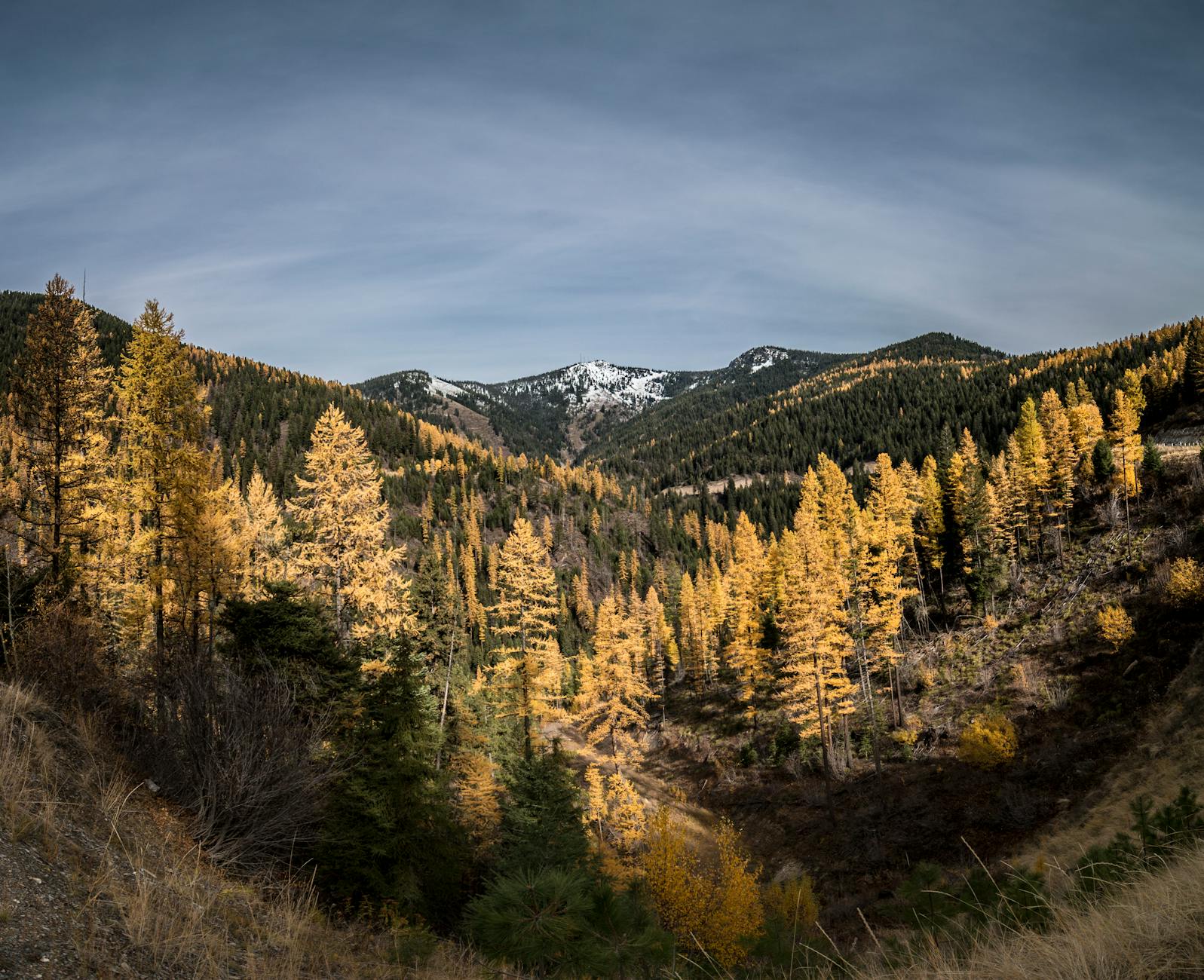
It sits in a mountain valley where five rivers converge, which means outdoor access that most cities simply can't compete with. Hiking, fly fishing, skiing, mountain biking — it's not a weekend destination for Missoula residents. It's Tuesday.
But here's where it gets financially interesting.
The Arbitrage That's Hiding in Plain Sight
Montana has no sales tax. None. For everyday purchases, that's an immediate, invisible discount on everything you buy compared to living in most other states. On a household that spends $60,000 a year on goods and services, the savings are real and constant — not a one-time bonus.
Montana's income tax is a separate story — it's not the lowest in the country — but the overall cost of living in Missoula tells a more nuanced tale. Housing costs, while they've risen meaningfully over the past five years, remain a fraction of what comparable quality-of-life cities charge on the coasts. A three-bedroom house with a mountain view that would cost $1.4 million in Boulder or Bend, Oregon, might still be found in the $450,000–$550,000 range in certain Missoula neighborhoods — though that window has narrowed.
For remote workers pulling salaries benchmarked to San Francisco, Seattle, or New York, the math is almost embarrassingly favorable.
Why the Economy Here Behaves Differently
Missoula has something unusual for a city of roughly 75,000 people: economic diversity that insulates it from single-sector crashes. Healthcare is enormous here — several major medical facilities anchor thousands of stable, well-paying jobs. The university provides another steady layer. And in recent years, remote-work migration has injected outside income into the local economy without proportionally straining local infrastructure — at least not yet.
Local economists have noted that Missoula's wage growth has outpaced national averages in certain sectors, while housing and service costs have lagged behind comparable markets. That gap — between what people earn and what things cost — is essentially the definition of financial arbitrage. And for people who spotted it early, it's been a genuine wealth-building opportunity.
Property values in Missoula have appreciated significantly over the past decade, particularly post-2020. People who bought in 2018 or 2019 and stayed have seen equity gains that rival some coastal markets, but without the crushing entry price.
The Remote Work Factor
The pandemic-era remote work boom hit Missoula in a particular way. Unlike smaller Montana towns that saw speculative buying from people who'd never actually visit, Missoula attracted people who came, stayed, and integrated. The city had the infrastructure — reliable internet, coworking spaces, an airport with direct flights to major hubs — to absorb the influx without completely losing its identity.
That said, longtime residents have complicated feelings about it. Rental prices rose. Traffic got worse. Some neighborhoods that felt affordable to local service workers no longer do. It's a tension Missoula is still actively navigating, and it's worth acknowledging honestly.
Is the Window Still Open?
This is the question everyone asks — and the honest answer is: partially.
The sharpest arbitrage window — buying property in 2017 to 2020 on a remote salary — has mostly closed. Home prices have moved. The secret is less secret than it was.
But the underlying fundamentals haven't evaporated. Montana still has no sales tax. Missoula's quality of life still dramatically outperforms what you'd get in a coastal city at the same price point. The outdoor access is still extraordinary. The community still has a character that larger cities can't manufacture.
For someone earning a remote salary of $90,000 or more and looking to build equity somewhere that won't require a seven-figure down payment, Missoula still makes a compelling case — especially compared to the alternatives that have already been fully discovered and priced accordingly.
What It Tells Us About Where We Look
Missoula is interesting not just as a place, but as a pattern. It represents a category of American city that gets overlooked precisely because it doesn't fit the standard narrative. It's not a tech hub. It's not a warm-weather escape. It doesn't show up in the listicles.
But it has something rarer: a genuine quality-of-life-to-cost ratio that most people only find after they've already moved somewhere more obvious.
Sometimes the best financial decisions are the ones that don't make sense until you actually go look.