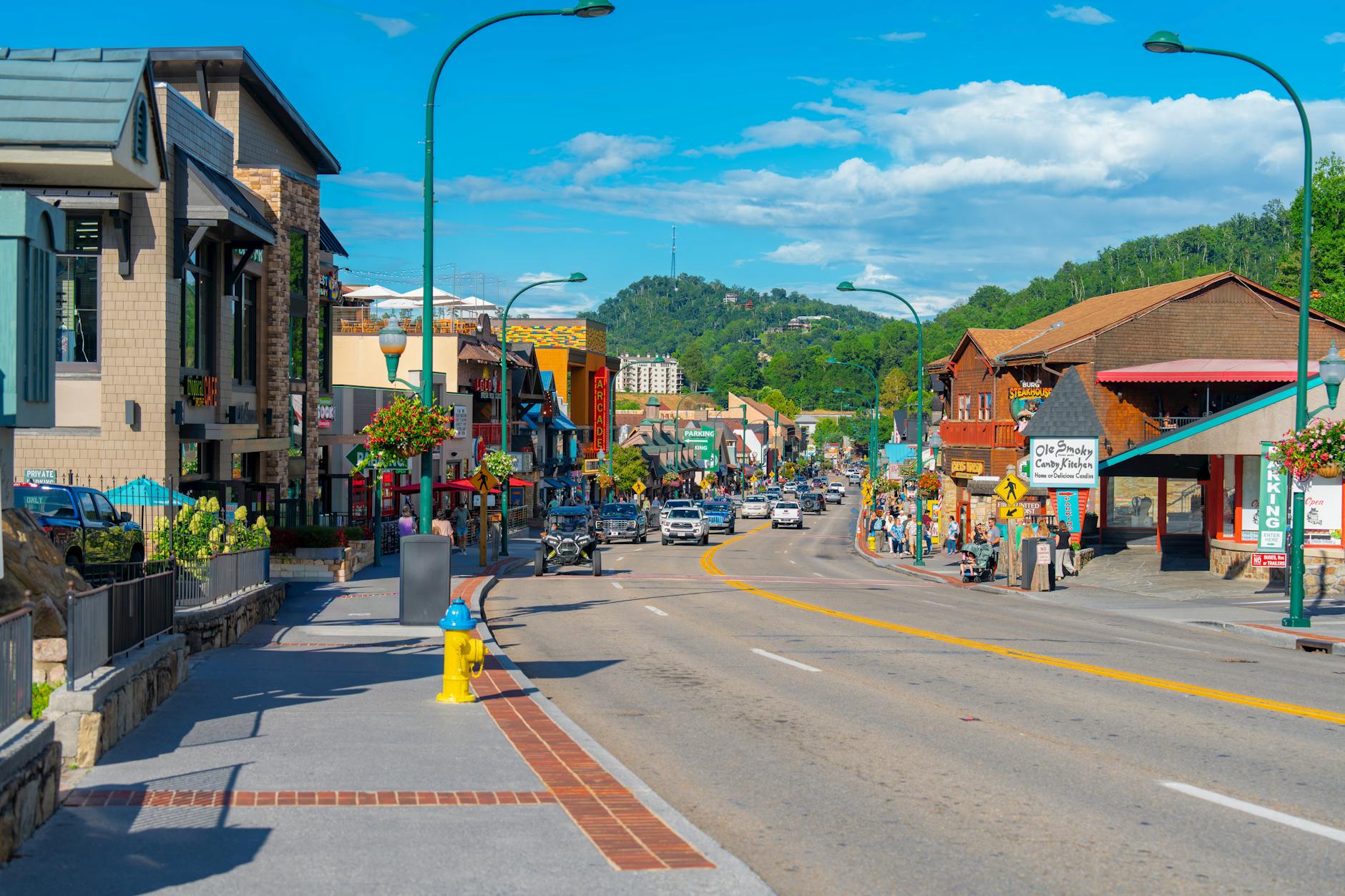
Nashville gets all the press. Gatlinburg gets the tourists. Chattanooga gets the tech-hub thinkpieces. But tucked into the rolling hills and river valleys of Tennessee, there's a smaller, less-photographed kind of place that has been quietly doing something remarkable with real estate values — and doing it almost entirely out of the spotlight.
The town is Cookeville, Tennessee — the seat of Putnam County, population roughly 36,000, located about 80 miles east of Nashville on I-40. It doesn't have a famous music scene. It doesn't have a celebrity chef restaurant that went viral on Instagram. What it does have is a convergence of factors that a small number of observant investors recognized years before the rest of the market caught on — and those investors have been handsomely rewarded for paying attention.
What the Numbers Actually Look Like
Between 2015 and 2024, median home prices in Cookeville rose by more than 120%, according to data tracked by Zillow and Redfin. To put that in context, the national median home price increase over the same period was roughly 80–85%. Cookeville didn't just keep pace with the national surge — it outran it, quietly, without a single breathless CNBC segment devoted to its zip code.
In 2019, the median home price in Cookeville sat around $175,000. By early 2024, that figure had climbed past $310,000. Rental vacancy rates have dropped. New construction permits have accelerated. And perhaps most tellingly, out-of-state buyer activity — long a leading indicator of real estate momentum — has increased substantially year over year.
Why Cookeville? What Early Buyers Actually Noticed
The investors who got into Cookeville early weren't working with secret information. They were working with different attention — looking at the kinds of signals that don't make headlines but have historically preceded real estate appreciation in mid-sized American markets.
Signal #1: A university anchor. Tennessee Tech University sits in the heart of Cookeville, enrolling roughly 10,000 students and employing a significant portion of the local workforce. University towns have long been recognized as real estate stabilizers — they create consistent rental demand, attract educated young professionals, and tend to weather economic downturns more gracefully than purely industrial or agricultural communities.
Signal #2: Proximity without saturation. Cookeville is close enough to Nashville to benefit from its gravitational pull — about 75 minutes by highway — but far enough away that it hadn't been absorbed into the Nashville metro's inflated pricing. That gap was a window. Remote work blew it wide open.
Signal #3: Remote work migration patterns. Starting in 2020 and accelerating through 2022, researchers tracking migration data from platforms like U-Haul, United Van Lines, and the Census Bureau noted a clear pattern: workers leaving expensive metros weren't just moving to obvious secondary cities. They were leapfrogging those cities entirely, landing in smaller, affordable communities with decent infrastructure and a lower cost of living. Cookeville checked every box — fiber internet access (thanks in part to infrastructure investments made years earlier), a functional regional airport nearby, and housing stock that was dramatically cheaper than anything within 50 miles of Nashville.
Signal #4: Land undervaluation. Putnam County's land prices, compared to surrounding counties and similar-sized markets in the Southeast, were measurably below what comparable fundamentals would have suggested. Experienced land investors — the quiet, unglamorous kind who spend their weekends looking at county parcel maps — had been buying rural acreage around Cookeville for years before the residential market caught fire.
What the Early Buyers Did Differently
Talking to investors who got into the Cookeville market in 2017 and 2018 reveals a consistent pattern of behavior. They weren't following real estate influencers or reading market reports from major brokerages. They were doing something simpler and older: driving the market themselves.
One Nashville-based investor described it this way: she was looking for towns within 90 minutes of a major metro, with a university, a hospital system, and a downtown that showed signs of beginning reinvestment — new coffee shops, a renovated theater, a farmers market that had started attracting vendors from outside the county. Cookeville had all of it. She bought her first duplex there in 2018 for $142,000. It recently appraised at $290,000.
Another investor, a remote software engineer who relocated from Austin in 2021, described noticing that Cookeville had unusually high walkability scores for a town its size, combined with home prices that were roughly one-third of what comparable square footage cost in Austin. He bought a single-family home and has since purchased two additional rental properties in the area.
What Might Come Next — And How to Find It
Cookeville's window of obvious undervaluation has largely closed. That's the nature of discovery — once enough people notice, the arbitrage disappears. But the framework that made Cookeville legible to early investors is replicable.
Researchers and independent real estate analysts have pointed to several similar markets worth watching in the mid-2020s:
- Morristown, Tennessee — another university-anchored small city in East Tennessee with infrastructure investment underway and prices still well below regional averages.
- Scottsboro, Alabama — sitting near Huntsville's booming aerospace economy with a fraction of the price pressure.
- Brevard, North Carolina — a small arts-and-outdoor-culture town in the Blue Ridge Mountains that has seen accelerating in-migration from larger metros.
The signals to look for remain consistent: a university or major employer anchoring the local economy, proximity (but not adjacency) to a major metro, visible but early-stage downtown reinvestment, and land prices that don't yet reflect the community's actual fundamentals.
The Rare Insider Takeaway
The most profitable real estate discoveries rarely announce themselves. They don't trend on social media. They don't get profiled in Forbes until the easy money is already gone. They show up in county parcel records, U-Haul data, and the gut instincts of people willing to drive down a highway most investors never bother to take.
Cookeville didn't need to be famous to make early investors a lot of money. It just needed to be noticed — by the rare few paying attention to the right things.