While most Americans struggle with rising property costs and maintenance expenses, a little-known federal program is quietly paying landowners to do less work on their property. The USDA's Environmental Quality Incentives Program (EQIP) sends annual payments directly to private landowners — including suburban homeowners — who agree to restore native ecosystems on their land.
The catch? There isn't one. You get paid whether your land produces anything profitable or not. In fact, the government prefers that it doesn't.
Beyond the Farm Gate
Most people assume EQIP only applies to large commercial farms. That's exactly what the USDA wants you to think — not because they're hiding anything, but because the program is chronically oversubscribed. Every dollar that goes to a suburban homeowner is a dollar that doesn't go to a struggling farmer.
But the law doesn't limit EQIP to agricultural operations. Any private landowner with enough acreage can potentially qualify, and "enough" is often much less than people expect.
Take Jennifer Walsh, a graphic designer in suburban Columbus, Ohio. Her 1.2-acre lot backs up to a degraded wetland area. Through EQIP, she receives $1,800 annually to maintain native plantings and a small constructed wetland in her backyard. The payment covers her entire property tax bill, and the restored habitat has increased her home's value by an estimated $15,000.
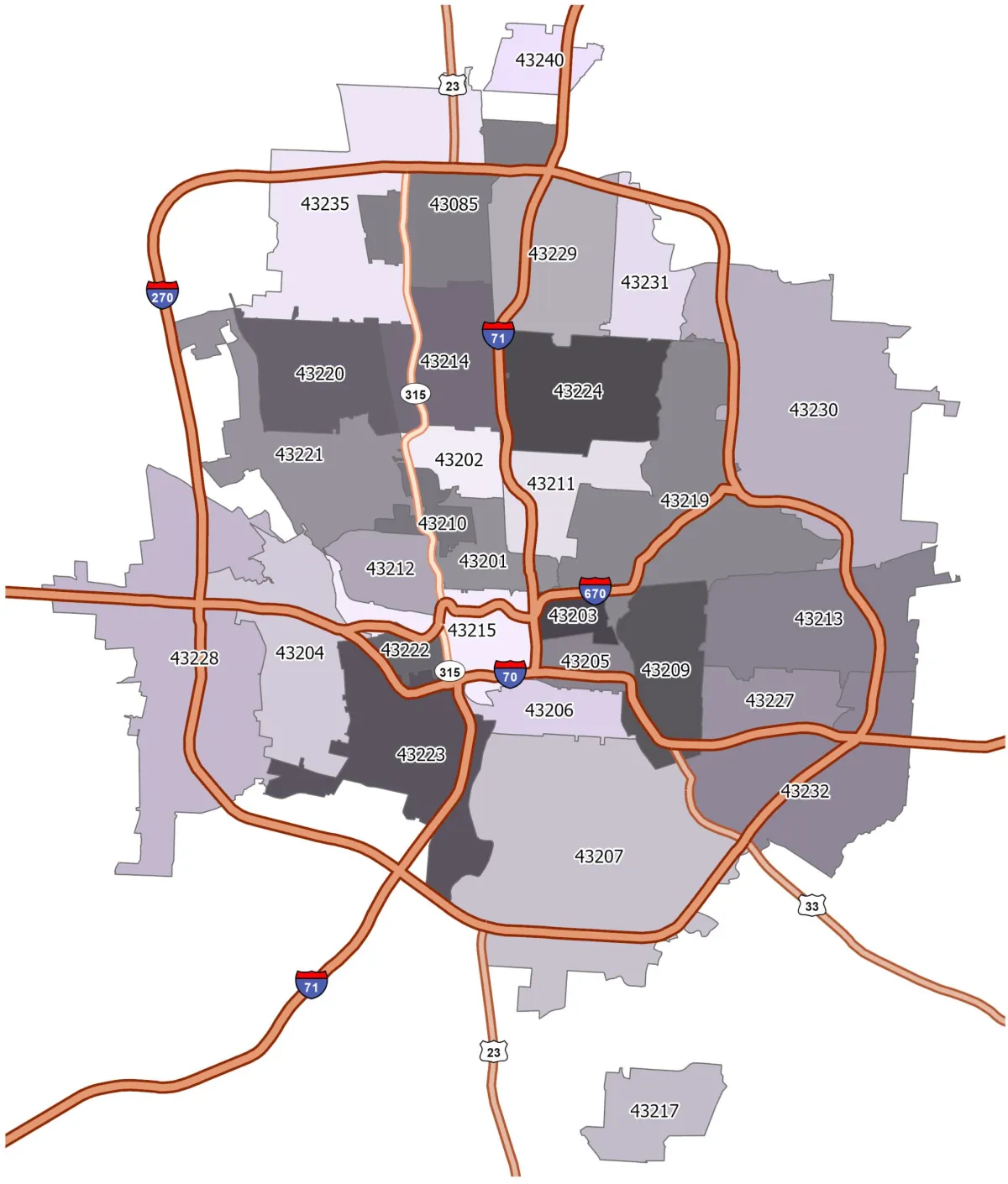 Photo: Columbus, Ohio, via gisgeography.com
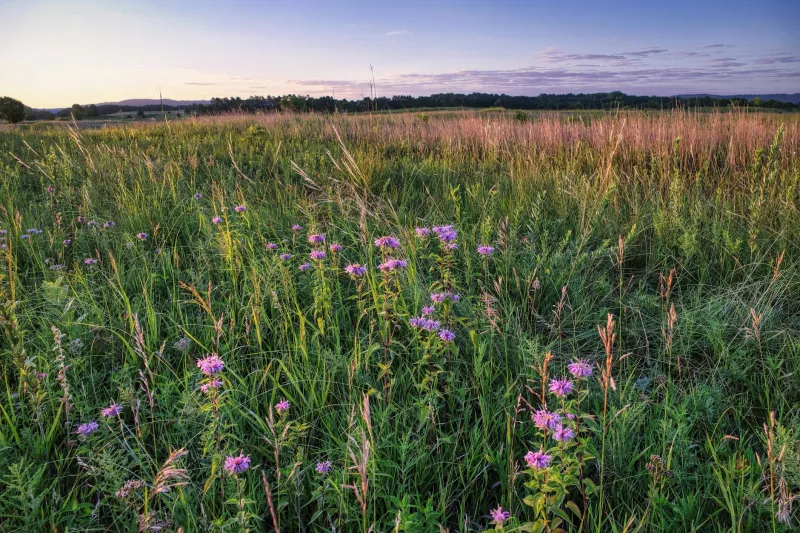
"I thought government conservation programs were for farmers," Walsh explains. "I had no idea they'd pay me to turn part of my yard into a mini-prairie."
The Qualification Matrix
EQIP eligibility depends on your property meeting specific conservation priorities, which vary by state and region. The program targets several categories that often overlap with suburban and rural residential properties:
Water quality protection: Properties near streams, lakes, or wetlands can qualify for payments to establish buffer zones with native vegetation. This includes many suburban developments built near water features.
Pollinator habitat: With native bee populations declining, EQIP pays landowners to establish and maintain pollinator-friendly native plant communities. A quarter-acre pollinator plot can qualify for several hundred dollars annually.
Soil erosion control: Properties on slopes or with erosion issues can receive payments for establishing ground cover and erosion control plantings.
Wildlife habitat: Landowners can be paid to create or restore habitat for specific species, from songbirds to native reptiles.
The key insight: these conservation goals often align perfectly with what environmentally-conscious homeowners want to do anyway.
The Payment Structure
EQIP payments come in two forms, and many participants receive both:
Cost-share payments cover 50-75% of initial restoration costs. This includes site preparation, native plants, fencing, and specialized equipment. For a typical backyard restoration, cost-share payments range from $2,000 to $8,000.
Annual maintenance payments provide ongoing compensation for maintaining the restored habitat according to a management plan. These payments typically range from $50 to $300 per acre annually and continue for 3-10 years depending on the specific practice.
The annual payments are the real treasure. Unlike the upfront cost-share, these ongoing payments require minimal work — mostly just avoiding activities that would damage the restored habitat.
State-by-State Opportunities
EQIP priorities vary dramatically by region, creating unexpected opportunities for homeowners in certain areas:
Minnesota and Wisconsin prioritize pollinator habitat, making suburban properties with sufficient space attractive candidates.
California focuses heavily on water conservation and fire prevention, creating opportunities for homeowners willing to replace water-intensive landscaping with native drought-resistant plants.
Texas emphasizes wildlife habitat, particularly for declining songbird species, opening doors for homeowners with larger lots.
Florida targets wetland restoration and water quality protection, benefiting homeowners near lakes, streams, or coastal areas.
Vermont and New Hampshire prioritize forest health and wildlife corridors, creating opportunities for homeowners with wooded properties.
The trick is understanding your local conservation priorities and positioning your property accordingly.
The Application Strategy
Successful EQIP applications require understanding what the program is really buying: measurable environmental benefits. The USDA doesn't care about your personal environmental values — they want documented improvements to specific conservation metrics.
Start with a conservation plan: Work with your local NRCS (Natural Resources Conservation Service) office to develop a formal conservation plan for your property. This free service identifies specific practices that would benefit your land and estimates their environmental impact.
Document existing conditions: Take detailed photos and measurements of current land use, vegetation, and any environmental issues. The USDA needs baseline data to measure improvement.
Focus on quantifiable benefits: Applications that promise specific outcomes — "restore 0.5 acres of native prairie" or "establish 200 linear feet of streamside buffer" — score higher than vague environmental goals.
Emphasize connectivity: Properties that connect to existing natural areas or other conservation lands receive priority. Even a small urban lot can be valuable if it fills a gap in a wildlife corridor.
The Maintenance Reality
Once accepted into EQIP, participants must follow a detailed management plan, but the requirements are often less burdensome than maintaining traditional landscaping:
Native plant communities typically require less water, fertilizer, and pest control than conventional lawns and gardens.
Mowing restrictions might limit cutting to once or twice per year, reducing maintenance time.
Chemical restrictions prohibit most pesticides and herbicides, but native plants generally need less chemical intervention.
Monitoring requirements involve annual photo documentation and occasional site visits from NRCS staff.
Many participants discover that EQIP maintenance actually reduces their property care workload while providing annual payments.
Hidden Benefits
Beyond direct payments, EQIP participation often triggers additional benefits:
Property tax reductions: Many states offer lower property tax assessments for land enrolled in conservation programs.
Utility rebates: Water utilities in drought-prone areas often provide additional rebates for replacing lawns with native landscaping.
Insurance discounts: Some insurers offer reduced rates for properties with natural fire breaks or flood-resistant landscaping.
Home value premiums: Real estate agents report that well-designed native landscaping can add 5-15% to home values in environmentally conscious markets.
These secondary benefits can double or triple the effective value of EQIP participation.
The Competitive Reality
EQIP receives far more applications than it can fund. In competitive states, only 20-30% of applications receive funding. However, smaller residential applications often have advantages over large agricultural projects:
Lower total cost: A $5,000 residential project is easier to fund than a $50,000 farm project when budgets are tight.
Faster implementation: Homeowners can typically complete restoration work in a single season, while farm projects might take years.
Higher environmental impact per dollar: Small properties in suburban areas can provide outsized environmental benefits by creating wildlife corridors or protecting water quality in developed watersheds.
The key is crafting applications that emphasize these competitive advantages.
The Overlooked Opportunity
Most eligible Americans never discover EQIP because the program doesn't advertise to homeowners. The USDA focuses its outreach on agricultural communities, leaving suburban and rural residential landowners in the dark about available opportunities.
Yet for property owners with conservation goals, EQIP represents one of the most generous government programs available. Unlike tax credits that only benefit high earners, EQIP payments go directly into participants' pockets regardless of their tax situation.
The program essentially pays Americans to let parts of their land return to nature — and the checks arrive whether or not that land ever produces anything profitable. For homeowners willing to trade some lawn maintenance for native habitat restoration, EQIP offers a rare opportunity to align environmental values with financial benefits.
The government wants to pay you to rewild your backyard. Most homeowners just don't know to ask.