
Walk into any bank today and apply for a personal loan, and you're using a financial tool invented by a man whose name appears in virtually no history books. Arthur Morris, a small-town Virginia lawyer, fundamentally changed how ordinary Americans access money — then somehow became one of history's most important forgotten figures.
 Photo: Arthur Morris, via img1.hscicdn.com
In 1910, when banks only lent to the wealthy and working people had nowhere to turn for legitimate credit, Morris quietly launched a revolution that would reshape the entire American economy.
When Banks Only Served the Rich
To understand Morris's breakthrough, you need to picture American banking in 1910. Traditional banks operated on a simple principle: you could only borrow money if you already had money. Loans required substantial collateral — real estate, stocks, or other valuable assets that working-class families simply didn't possess.
If a factory worker needed $100 to buy tools for a better job, or a shop clerk wanted to purchase a bicycle to expand her commute options, legitimate lending simply wasn't available. Their only choice was loan sharks, who charged crushing interest rates and used intimidation to collect debts.
"The banking system was essentially closed to anyone earning less than $1,500 a year," explains financial historian Dr. Rebecca Martinez from Georgetown University. "That excluded roughly 80% of American workers."
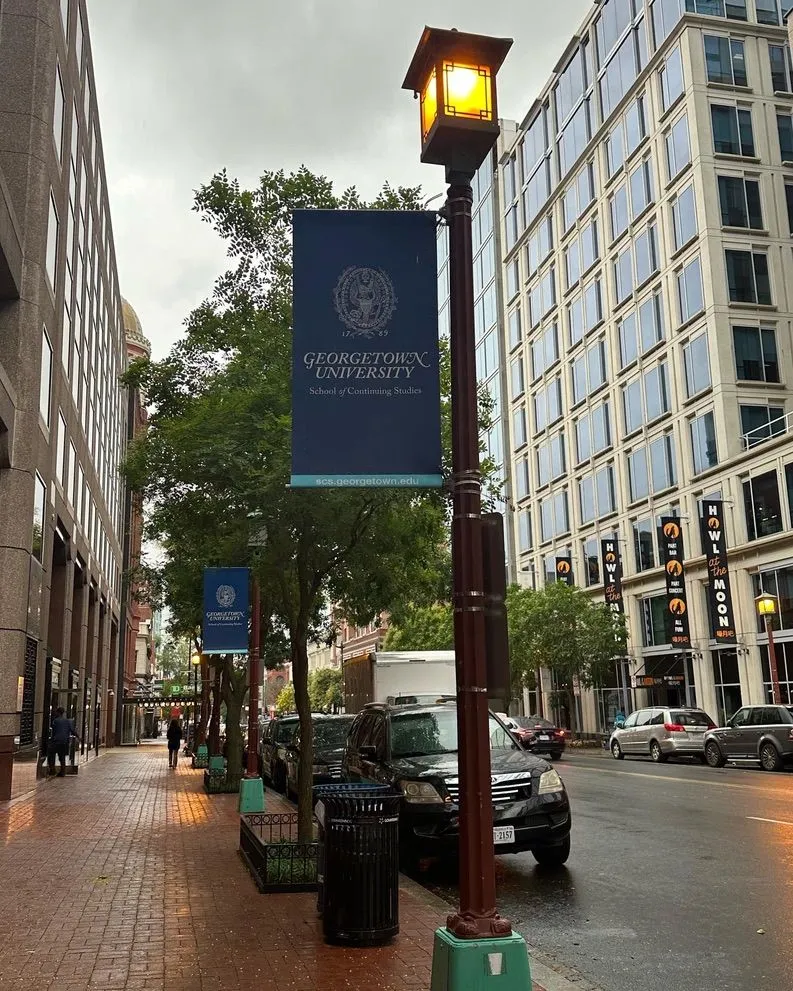 Photo: Georgetown University, via i.pinimg.com
Morris, practicing law in Norfolk, Virginia, saw this problem firsthand. His working-class clients constantly faced financial emergencies with no reasonable solutions. A sick child, a broken wagon, a family emergency — any unexpected expense could spiral into financial disaster.
The Character-Based Revolution
Morris's breakthrough was elegantly simple: what if banks lent money based on character instead of collateral? He developed a system where borrowers could get loans by providing references from their employer, landlord, and neighbors. No property required, no co-signers from wealthy families — just proof that you were reliable and hardworking.
The Morris Plan, as it became known, worked like this: borrowers would purchase "investment certificates" in small weekly or monthly installments. Once they'd saved a predetermined amount, they could borrow against those certificates at reasonable interest rates. It was essentially forced savings combined with character-based lending.
"Morris figured out that working people were actually excellent credit risks if you structured the loans properly," Martinez notes. "They just needed a system designed for their reality instead of rich people's reality."
The first Morris Plan bank opened in Norfolk in 1910. Within months, demand overwhelmed capacity. Workers lined up to access legitimate credit for the first time in their lives.
Spreading Across America
What happened next was remarkable: the Morris Plan spread organically across the United States, often through word-of-mouth and local entrepreneurship. By 1920, over 100 Morris Plan banks operated in American cities. By 1930, that number had grown to nearly 400.
Unlike modern franchising, Morris didn't try to control this expansion. He published his methods openly and encouraged others to adapt them for local conditions. Banks in Chicago modified the plan for immigrant communities. Southern banks adjusted it for agricultural workers. Western banks tailored it for miners and railroad workers.
"It was like open-source banking," says Dr. James Chen, who studies early 20th-century finance at Northwestern. "Morris created the template, then let communities customize it for their needs."
The plan's success attracted attention from established banks, who initially dismissed it as a fad. When working-class borrowers consistently repaid their loans at rates comparable to wealthy clients, traditional banks began adopting similar programs.
The Forgotten Foundation
Most Americans today use financial products that trace directly back to Morris's innovations. Auto loans, personal loans, even credit cards operate on principles he established: regular payments, character-based underwriting, and loans designed for people without substantial assets.
"Every time you finance a car or apply for a credit card, you're using Arthur Morris's basic framework," Chen explains. "He proved that ordinary people could be trusted with credit if you structured it properly."
The Morris Plan also introduced concepts now considered fundamental to American finance: installment payments, credit scoring based on behavior rather than wealth, and the idea that access to credit could be a tool for economic mobility rather than just a privilege of the rich.
During the Great Depression, Morris Plan banks often survived when traditional banks failed. Their focus on small loans to working people created more stable revenue streams than the large commercial loans that devastated conventional banks.
Why History Forgot Him
So why don't we know Arthur Morris's name? Several factors contributed to his historical invisibility. First, he was fundamentally a behind-the-scenes innovator rather than a public figure. While contemporary titans like Henry Ford or Andrew Carnegie built personal brands, Morris focused on building systems.
Second, the Morris Plan's success led to its absorption into mainstream banking. By the 1940s, most major banks offered similar products, but they didn't credit Morris or use his name. His innovation became so standard that its revolutionary origins were forgotten.
Third, Morris himself seemed uninterested in fame. He spent his later years quietly practicing law in Virginia, rarely giving interviews or writing about his banking innovations. When he died in 1973, his obituary in most newspapers mentioned his legal career but barely referenced the Morris Plan.
The Lasting Impact
"Morris essentially democratized credit in America," Martinez argues. "Before him, borrowing money was a privilege of class. After him, it became a tool anyone could access."
This democratization had profound social effects. Working-class families could invest in education, start small businesses, or weather financial emergencies without falling into predatory lending traps. The Morris Plan helped create America's mobile, opportunity-seeking middle class.
Today, as debates rage about predatory lending, student debt, and financial inequality, Morris's core insight remains relevant: the problem often isn't that people can't handle credit responsibly, but that credit systems aren't designed for how most people actually live.
Arthur Morris proved that ordinary Americans could be trusted with financial tools previously reserved for the elite. In the process, he quietly laid the foundation for modern consumer finance — then disappeared into history, leaving behind a revolution that millions of people use every day without knowing his name.
Perhaps that's fitting. Morris wasn't interested in building monuments to himself. He was interested in building systems that worked for everyone.