The Underground Network That Saved America's Food Supply — And Why Ordinary People Are Rebuilding It Today
The Seeds That Corporate America Forgot
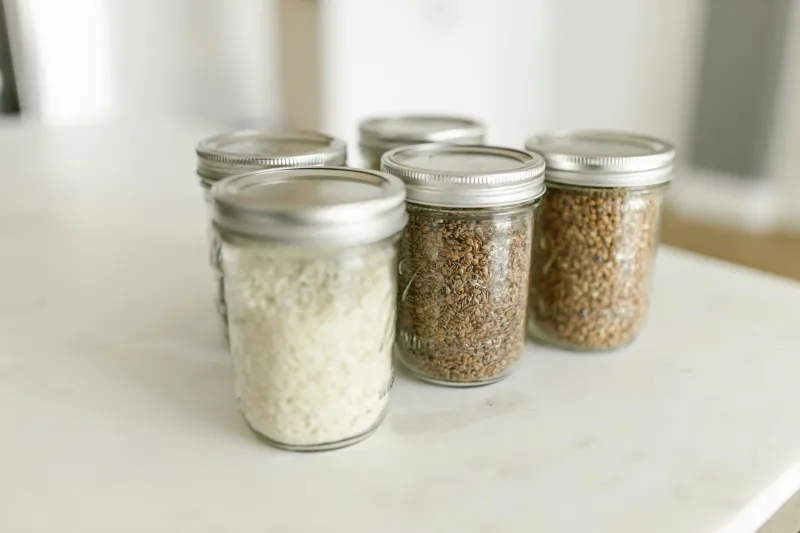
In 1936, as dust storms ravaged the Great Plains, Emma Schultz made a decision that would quietly influence American agriculture for decades. Instead of throwing away the seeds from her family's failed wheat crop, she carefully cleaned and stored them in mason jars, then began trading with neighbors whose crops had also failed.
 Photo: Emma Schultz, via newstudent.missouri.edu
What Schultz didn't realize was that she had become part of an informal network that was preserving genetic diversity that commercial agriculture was rapidly abandoning. While big agricultural companies focused on standardized, high-yield varieties, thousands of farmers and gardeners like Schultz were maintaining heirloom seeds that carried traits essential for long-term food security.
This grassroots seed-saving movement operated almost entirely under the radar, yet it may have prevented a complete collapse of American food production during one of the most challenging periods in the nation's history.
The Crisis Nobody Saw Coming
By the 1930s, American agriculture had already begun its shift toward industrial monoculture. Large seed companies promoted uniform varieties that could be planted, harvested, and processed efficiently at scale. Traditional varieties — often adapted to specific local conditions over generations — were being rapidly abandoned.
When the Dust Bowl hit, this genetic uniformity became a liability. Commercial varieties that performed well under normal conditions failed catastrophically in the harsh conditions of the 1930s. Crops that had thrived for decades suddenly couldn't survive the combination of drought, wind, and depleted soil.
But in farmhouse pantries and root cellars across rural America, something else was happening. Families were maintaining seeds from older varieties — crops their grandparents had grown, varieties that might not produce the highest yields in good years but could survive almost anything.
The Invisible Infrastructure
What emerged during the Depression wasn't a formal organization but rather an organic network of seed sharing that operated through existing social connections. Church groups, grange halls, county fairs, and even quilting circles became venues for seed exchanges.
Women, in particular, played a crucial role in this network. While men focused on cash crops and commercial varieties, women often maintained kitchen gardens using seeds passed down through families or traded with neighbors. These "women's varieties" included everything from drought-resistant beans to cold-hardy greens that could extend the growing season.
The system operated on principles that would seem foreign to modern agriculture: seeds were shared freely, varieties were selected for resilience rather than yield, and genetic diversity was valued over uniformity.
Why History Forgot This Story
The Depression-era seed network never made it into mainstream agricultural history for several reasons. First, it was largely informal and undocumented. Unlike commercial agriculture, which generated sales records and industry publications, seed sharing happened through personal relationships that left little paper trail.
Second, it was often dismissed as "backward" by agricultural experts of the time. Extension agents and agricultural colleges promoted modern, scientific farming methods and viewed traditional seed saving as a relic of subsistence agriculture.
Finally, the network's success was largely invisible. When crops failed, it made headlines. When heirloom varieties helped families survive the worst agricultural disaster in American history, nobody noticed — partly because the families themselves often didn't realize how unique their situation was.
The Modern Revival
Today, a new generation of Americans is rediscovering the principles that sustained rural communities during the Depression. Community seed libraries — formalized versions of the informal networks that existed in the 1930s — are popping up in cities and towns across the country.
Unlike their Depression-era predecessors, modern seed libraries operate with institutional support. Public libraries, community centers, and environmental organizations provide space and organizational structure for what is essentially the same activity: preserving genetic diversity through community-based seed sharing.
The Southern Exposure Seed Exchange in Virginia, founded in 1982, was one of the pioneers in this movement. Today, organizations like the Seed Savers Exchange maintain networks of thousands of gardeners who preserve heirloom varieties that would otherwise disappear.
 Photo: Seed Savers Exchange, via citisportsonline.com
The Legal Landscape
What most participants in modern seed libraries don't realize is that their activities exist in a complex legal environment that would have been unimaginable to Depression-era seed savers.
Modern seed laws, designed primarily to regulate commercial agriculture, create potential complications for community seed sharing. Some states require seed to be tested and labeled before distribution, while federal regulations govern the movement of seeds across state lines.
Most community seed libraries operate in a legal gray area, relying on exemptions for "amateur" gardeners or small-scale, non-commercial activities. But as the movement grows, some participants are discovering that their activities might have commercial implications they hadn't considered.
The Financial Side Nobody Talks About
Here's where it gets interesting for modern participants: some heirloom varieties preserved through community seed networks have significant commercial value. Rare varieties adapted to specific growing conditions or with unique characteristics can command premium prices in specialty markets.
Several participants in seed library networks have discovered that varieties they've been maintaining as a hobby have commercial potential. Restaurants seeking unique ingredients, craft breweries looking for heritage grains, and specialty food producers all represent markets for unusual varieties.
The legal question becomes: who owns varieties that have been maintained through community networks? Unlike modern hybrid seeds, which are typically protected by plant patents or plant variety protection, many heirloom varieties exist in a legal commons where anyone can grow and sell them.
The Insurance Policy Hidden in Plain Sight
What Depression-era seed savers understood intuitively, and what modern participants are rediscovering, is that genetic diversity represents a form of insurance against agricultural catastrophe.
Commercial agriculture's focus on uniformity creates efficiency but also vulnerability. When a disease or pest targets a widely-planted variety, the results can be devastating. The Irish Potato Famine, the Southern Corn Leaf Blight of 1970, and numerous other agricultural disasters throughout history have all resulted from over-reliance on genetically uniform crops.
Community seed networks, by maintaining diverse varieties with different strengths and weaknesses, create resilience that commercial agriculture often lacks.
The Modern Twist
Today's seed libraries have advantages that their Depression-era predecessors couldn't have imagined. Digital databases can track varieties and their characteristics, online networks can connect seed savers across vast distances, and modern preservation techniques can maintain seed viability for decades.
But they also face challenges that didn't exist in the 1930s. Corporate consolidation means that a handful of companies now control the majority of the world's commercial seed supply. Legal restrictions on seed saving have made it more difficult for farmers to maintain their own varieties. And urbanization has disconnected most Americans from food production entirely.
Why This Matters Now
Climate change is creating growing conditions that mirror, in some ways, the challenges of the 1930s. Extreme weather events, shifting precipitation patterns, and rising temperatures are stressing agricultural systems that depend on varieties selected for historical climate conditions.
The genetic diversity maintained through community seed networks may prove essential for adapting agriculture to these changing conditions. Varieties that survived the Dust Bowl may carry traits that will be crucial for surviving the droughts, floods, and temperature extremes that climate scientists predict for the coming decades.
The Quiet Revolution
What's happening in community seed libraries across America represents something larger than gardening or even agriculture. It's a quiet assertion that ordinary people can take responsibility for preserving resources that are essential for long-term survival.
Like their Depression-era predecessors, today's seed savers are creating networks that operate largely outside commercial and governmental systems. They're preserving genetic diversity, building community resilience, and maintaining knowledge that could prove crucial in ways they may never fully understand.
The difference is that this time, at least some of them know they're doing it.