You Can Own a Piece of the Skyline Without Owning the Ground Beneath It — Here's the Real Estate Secret Institutions Don't Talk About
The Assumption That Costs People Fortunes
When most Americans think about buying real estate, they picture one clean transaction: you pay, you own the land, you own the building, end of story. The deed is yours. The dirt is yours. Simple.
But that's not how some of the most valuable properties in the country actually work — and it's not how a growing number of savvy investors are building wealth today.
There's a class of real estate instruments that most people have never encountered: tools that split property ownership into separate, tradeable pieces. You can own the right to build on land without owning the land itself. You can own the cubic feet of air above a building without owning the building. You can collect income from property you'd never be able to afford to buy outright.
This isn't a loophole or a workaround. It's a deeply established part of American property law that institutional investors have been quietly using for generations — while the rest of us were busy doing things the conventional way.
What Is a Ground Lease, Exactly?
A ground lease is exactly what it sounds like: instead of selling land outright, a landowner leases it — sometimes for 50, 75, or even 99 years — to a developer or investor who then builds on it.
The developer constructs the building. The developer owns the building. But the landowner keeps the land itself, collecting lease payments for the entire term of the agreement.
When the lease expires, everything built on that land typically reverts to the landowner. The building, the improvements, all of it.
This arrangement sounds almost medieval, and in a way it is — ground leases trace their roots back to English common law. But they never disappeared. They just moved upmarket.
Some of the most recognizable real estate in America operates on ground leases. Portions of Rockefeller Center in New York City. Major commercial developments in Hawaii, where the Bishop Estate has historically held land under long-term ground leases. High-end retail corridors where landowners figured out decades ago that holding the dirt was more valuable than developing it themselves.
Why Would Anyone Build on Land They Don't Own?
This is the question most people ask when they first hear about ground leases, and it's a fair one.
The answer comes down to capital efficiency. Land is often the most expensive part of any development deal. In a major city, land costs can represent 30 to 50 percent or more of total project cost. If a developer can lease the land instead of buying it, they free up enormous amounts of capital to put into the actual building — or into other deals entirely.
For smaller investors and entrepreneurs, this can be transformative. Imagine being able to develop a commercial property in a prime location with a fraction of the capital you'd normally need, simply because you're leasing the land underneath it rather than purchasing it.
Ground leases also tend to come with favorable financing terms. Lenders often view ground-leased properties positively because the landowner has a strong incentive to see the development succeed — their long-term income depends on it.
Air Rights: The Invisible Real Estate Above Your Head
If ground leases are underappreciated, air rights are practically invisible to most people — which is remarkable given how valuable they can be.
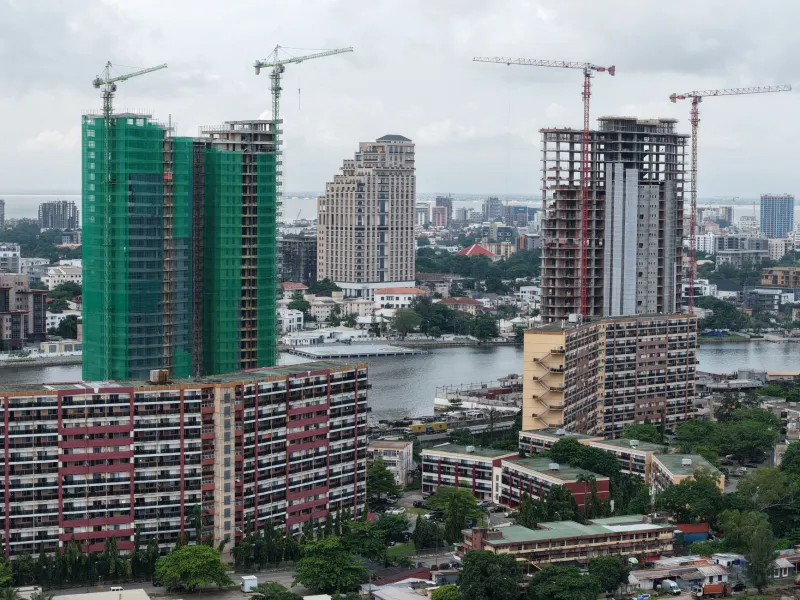
In dense urban environments, property ownership extends not just across the land but upward through a column of air above it. That airspace can be bought, sold, leased, and transferred independently of the land itself.
Developers in New York City have been trading air rights for decades. When a historic building or a low-rise property sits on valuable urban land, the owner can sell the unused development rights — the right to build taller — to a neighboring developer who wants to construct something more ambitious than local zoning would otherwise allow.
The numbers involved are staggering. Air rights in Manhattan have sold for hundreds of dollars per square foot. Owners of modest properties in the right locations have quietly pocketed millions of dollars by selling rights to airspace they were never going to use anyway.
How Ordinary People Are Getting In
Here's where it gets interesting for people who aren't institutional investors or Manhattan developers.
Ground leases have started appearing in smaller markets — mid-sized cities, suburban commercial corridors, even some residential contexts — as a way to make deals work when traditional financing falls short.
Some landowners in high-cost metros are offering ground leases to small developers who couldn't otherwise afford to build in desirable neighborhoods. Some municipalities are using ground leases to encourage affordable housing development without permanently transferring public land into private hands.
On the buyer side, real estate investors are beginning to look at ground lease income as a distinct asset class — predictable, long-term cash flow backed by physical land, with minimal management overhead. It's the kind of quiet, boring income stream that tends to look very attractive when stock markets get volatile.
Air rights are trickier for individual investors to access, but they're not impossible. Property owners in cities with active development markets can consult with a real estate attorney to understand what their airspace might be worth — sometimes discovering a hidden asset they never knew they had.
The Bigger Picture
What makes ground leases and air rights so fascinating is that they reveal something most people never consider: real estate isn't one thing. It's a bundle of rights — rights to use, to develop, to collect income, to exclude others — that can be separated, traded, and recombined in ways that create value for everyone involved.
Institutional investors figured this out a long time ago. The question is whether ordinary Americans will start paying attention before the next generation of deals gets done without them.