The Victorian Housewife Money System That Modern Minimalists Are Accidentally Recreating
The Ledger That Launched a Fortune
In 1887, Mary Catherine O'Brien started keeping what she called her "household mathematics" in a leather-bound ledger. Every purchase, every seasonal price fluctuation, every bulk buying opportunity got recorded in her precise handwriting. By 1902, her careful tracking and strategic purchasing had accumulated what would be worth roughly $47,000 in today's money — wealth that her railroad worker husband never knew existed.
O'Brien wasn't unique. Across America, women who couldn't legally control bank accounts were developing intricate financial systems that modern FIRE movement bloggers would recognize instantly.
The Original Zero-Based Budgeting System
Long before financial gurus popularized zero-based budgeting, 19th-century housewives practiced what they called "dollar distribution." Every cent received from their husbands got allocated to specific purposes before any spending occurred. The difference? These women had to be far more creative about generating surplus value.
Sarah Whitman's 1891 household ledger, preserved in the Massachusetts Historical Society, reveals a sophisticated system of seasonal arbitrage. She tracked grocery prices across multiple stores, identified the lowest-cost weeks for different commodities, and timed major purchases to maximize household purchasing power.
Whitman bought flour in 50-pound quantities during harvest season when prices dropped 30%. She purchased fabric in January when retailers cleared winter inventory. Her ledger shows consistent 15-20% savings compared to week-to-week purchasing — savings she quietly accumulated in a coffee tin hidden behind her kitchen stove.
The Bulk Buying Networks That Predated Costco
Modern bulk buying clubs didn't invent group purchasing power. Victorian housewives organized informal cooperatives that pooled resources for wholesale purchases decades before Sam's Club existed.
Elizabeth Morrison's correspondence, discovered in a Pittsburgh estate sale, documents a network of twelve neighborhood women who coordinated monthly bulk purchases. They bought everything from soap to preserves at wholesale prices, then distributed goods according to each family's contribution and needs.
Morrison's letters reveal that their cooperative consistently achieved 25-40% savings compared to retail prices. More importantly, the surplus goods often got resold to neighbors at slight markups, generating what Morrison called "household earnings" that accumulated independently of their husbands' wages.
The Side Hustle Economy That History Forgot
While legal restrictions prevented women from starting formal businesses, creative housewives found dozens of ways to generate independent income. They sold baked goods, took in laundry, grew vegetables for local markets, and provided childcare for working mothers.
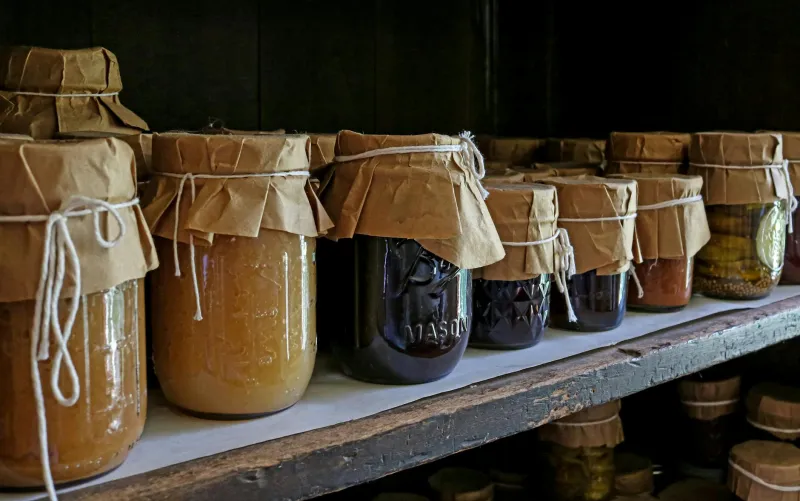
Anne Richardson's diary from 1895 Detroit documents a sophisticated operation selling preserved foods to boarding houses and restaurants. She calculated that her time investment of 15 hours weekly generated monthly profits equivalent to 30% of her husband's factory wages.
Richardson reinvested profits into expanded preservation equipment, allowing her to process larger quantities and negotiate better prices with suppliers. Her operation eventually employed three other neighborhood women — creating what amounted to an informal food processing business that operated entirely outside official economic records.
The Investment Strategies Hidden in Plain Sight
Without access to formal investment vehicles, housewives developed alternative wealth accumulation strategies that modern financial advisors would recognize as sophisticated asset diversification.
Many women invested in durable goods that held value while providing utility. High-quality furniture, silver serving pieces, and fine china served dual purposes as household assets and stores of value. Unlike cash savings, these investments remained hidden from husbands while providing long-term appreciation potential.
Margaret Kelly's estate inventory from 1903 reveals household goods worth nearly three times her husband's annual salary. Her systematic purchasing of quality items during economic downturns, combined with meticulous maintenance and strategic timing of major acquisitions, created substantial wealth that remained invisible to contemporary observers.
How Modern FIRE Bloggers Reinvented the Wheel
Today's financial independence movement promotes strategies that Victorian housewives pioneered by necessity. Extreme couponing mirrors their seasonal purchasing patterns. Meal planning and bulk cooking replicate their food preservation and preparation systems. Even the popular "pay yourself first" concept echoes their practice of immediately allocating incoming money to specific purposes.
Popular FIRE blogger Michelle Schroeder-Gardner unknowingly describes Mary O'Brien's 1890s system when she explains her approach to tracking every expense and optimizing household spending. The main difference? Schroeder-Gardner can invest surplus in index funds, while O'Brien had to hide cash in coffee tins.
The minimalism movement's focus on intentional consumption directly parallels Victorian housewives' careful consideration of every purchase. When modern minimalists talk about "buying quality items that last," they're essentially rediscovering the investment philosophy that women like Margaret Kelly used to build wealth through household goods.
Why the Original System Worked So Well
Victorian housewives succeeded because legal restrictions forced them to be more creative and disciplined than their modern counterparts. They couldn't impulse-purchase online or rely on credit cards to smooth over poor planning. Every financial decision required careful consideration and advance preparation.
Their systems also benefited from social networks that modern Americans often lack. Neighborhood women shared price information, coordinated group purchases, and provided mutual support for money-saving strategies. These informal networks created accountability and knowledge-sharing that enhanced individual efforts.
Most importantly, these women understood something that modern consumers often forget: wealth accumulation requires consistent small actions over long periods. Their daily attention to household economics, combined with patience and strategic thinking, generated substantial results despite severe legal and social constraints.
The Lessons Modern Americans Are Missing
While today's FIRE movement has rediscovered many Victorian housewife strategies, it often misses the community-building aspect that made the original system so effective. Modern Americans tend to pursue financial independence as individual projects, missing opportunities for group purchasing power and shared knowledge that their predecessors took for granted.
The original practitioners also understood that wealth building required lifestyle design, not just expense tracking. They organized their entire households around financial efficiency, integrating money management into daily routines rather than treating it as a separate activity.
Perhaps most importantly, Victorian housewives proved that substantial wealth accumulation is possible even under severe constraints. Their success suggests that modern Americans' financial challenges often stem from lack of discipline and creativity rather than insufficient income or opportunity.
The next time someone claims that financial independence requires high-tech investment strategies or complex optimization, remember Mary O'Brien's leather ledger and coffee tin savings account. Sometimes the most effective financial strategies are also the oldest ones.