The Depression-Era Land Grab That Created Today's Quiet Millionaires
The Government Program Nobody Remembers
In 1935, while most Americans were focused on soup lines and unemployment, the federal government was quietly orchestrating one of the largest wealth transfers in American history. The Resettlement Administration, a New Deal agency that lasted barely three years, purchased over 10 million acres of struggling farmland and redistributed it to low-income families.
Most history books mention it as a footnote. But for thousands of American families, it became the foundation of generational wealth that's still paying dividends today.
When the Government Played Real Estate Mogul
The program emerged from a perfect storm of economic desperation. The Dust Bowl had devastated farming communities, the Depression had crushed land values, and millions of acres sat abandoned or severely underused. The federal government stepped in as buyer of last resort.
But instead of holding the land, they did something unprecedented: they gave it away.
Families could acquire 40 to 160 acres for token payments spread over decades. The catch? They had to actually live on and work the land. No speculation, no flipping — just honest farming.
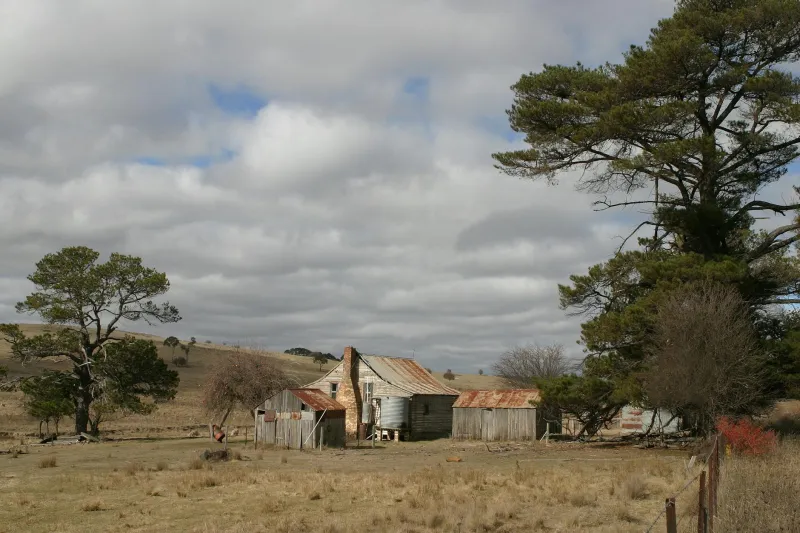
Roy Stryker, who documented the program through photography, captured families moving onto their new properties with little more than hope and a government deed. What he couldn't capture was how those pieces of paper would transform into million-dollar assets decades later.
 Photo: Roy Stryker, via sp-ao.shortpixel.ai
The Families Who Never Left
Take the Henderson family of rural Virginia. In 1936, James Henderson received 120 acres of former tobacco land through the program. The property was considered marginal — too poor for profitable farming, too remote for development.
Today, that same land sits in the path of suburban sprawl outside Richmond. Conservative estimates put its value at $2.3 million. The Henderson descendants still own it, though they're not exactly advertising the fact.
Similar stories play out across the country. Land that seemed worthless in 1936 now sits adjacent to growing cities, near major highways, or on top of valuable mineral rights. Some families discovered their "worthless" inheritance contained oil, natural gas, or valuable timber.
The Wealth Nobody Talks About
What's remarkable is how quiet these families remain about their good fortune. Unlike tech entrepreneurs or Wall Street success stories, the beneficiaries of the Resettlement Administration rarely make headlines.
Part of it is cultural. Many come from farming communities where discussing wealth is considered unseemly. Part of it is practical — drawing attention to valuable land can attract unwanted interest from developers, tax assessors, and distant relatives.
But there's also something deeper: many don't think of themselves as wealthy. The land has been in the family for three generations. It's not liquid wealth — it's home.
The Program's Hidden Scope
The Resettlement Administration operated in almost every state, but its impact was particularly concentrated in the Southeast, where sharecropping had left much land degraded and underused. Arkansas, Mississippi, Alabama, and Georgia saw massive land redistributions.
In Arkansas alone, the program created over 30 planned communities, each built around redistributed farmland. Some of these communities failed, but others became the foundation for multi-generational family wealth.
The program also had an often-overlooked component: it specifically targeted minority families in some regions. While the overall program reflected the racial attitudes of the 1930s, certain administrators quietly ensured that Black families received land grants, creating pockets of Black-owned rural wealth that persist today.
The Modern Discovery
Many current landowners don't even know their property's origin story. Real estate attorneys occasionally uncover the history during title searches, revealing that prime development land was once a Depression-era government giveaway.
In 2019, a land development company near Atlanta discovered that a 200-acre parcel they wanted to purchase had been granted to a single family in 1937. The descendants had held onto it through three generations, watching it transform from marginal farmland into prime suburban real estate.
The family had no idea their land was worth over $8 million until developers started calling.
The Unintended Consequences
The Resettlement Administration was designed as emergency relief, not wealth creation. Administrators expected families to work the land for a generation, then sell it as they moved to cities for better opportunities.
They didn't anticipate that some families would stay, or that American development patterns would eventually make even remote rural land valuable.
They also didn't foresee how mineral rights would become valuable decades later. Some families who received land grants also received the mineral rights underneath — rights that became extremely valuable during the fracking boom of the 2000s.
The Lessons Hidden in Plain Sight
The Resettlement Administration reveals something important about wealth creation: sometimes the best investments are the ones you don't think about.
Families who held onto their land grants weren't making calculated investment decisions. They were simply staying home. But that "simple" decision to remain on land their grandparents received for almost nothing created more wealth than most sophisticated investment strategies.
It also highlights how government programs can have effects that last far beyond their intended scope. A three-year relief program created wealth that's still accumulating nearly a century later.
The Legacy That Keeps Growing
Today, as remote work makes rural living more attractive and climate change increases the value of water rights, some of these old land grants are appreciating faster than ever.
Families who inherited "worthless" farmland are discovering they own crucial water resources, prime locations for solar farms, or development sites for the growing remote workforce.
The Resettlement Administration ended in 1938, but its effects continue to ripple through American families. It stands as perhaps the most successful wealth creation program in American history — one that most people have never heard of.
For the families still holding those original deeds, it's a reminder that sometimes the best investment strategy is simply staying put.